What Is Ola?
Ola is a popular Indian ride-hailing and mobility platform that connects passengers with drivers through its mobile app for convenient transportation services. It also offers other consumer services such as vehicle rentals, financial services, and logistics. Olacabs
Business Model & Expansion :
Ola was founded in December 2010 by Bhavish Aggarwal and Ankit Bhati in Bengaluru, India, with the goal of building smart, accessible mobility solutions across the country. For customers, Ola offers ride-hailing services through cars, auto-rickshaws, and bikes, along with outstation travel, rental options for hourly or long trips, and financial services such as Ola Money, vehicle financing, and micro-insurance. The company operates under its parent firm ANI Technologies, which reported revenue of around ₹2,368 crore in FY24, reflecting a decline from previous years but also achieving EBITDA profitability in its mobility and financial services segments, indicating stronger operational efficiency. Ola’s business model is driven by commissions from rides, subscription plans like Ola Select, and financial service fees, and it currently operates in 250+ cities across India, while expanding into logistics and commerce services.
Ola’s First Business & Its Impact on Growth
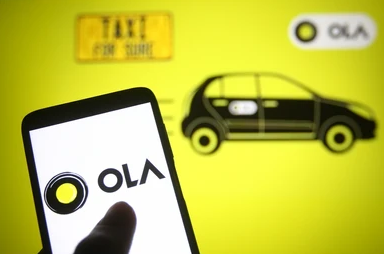
Ola’s first and core business is ride-hailing, where it connects passengers with drivers for cab, auto-rickshaw, and bike rides through its mobile app. This business played a major role in Ola’s early growth, helping the company scale rapidly across India and build a strong brand presence in urban and semi-urban markets.
However, ride-hailing is a high-cost and low-margin business due to expenses like driver incentives, discounts, operations, and customer acquisition. Because of this, Ola did not generate consistent profits for many years and reported repeated losses despite growing bookings and users. In recent years, the core mobility business has started contributing more positively by achieving EBITDA profitability, meaning operations are becoming more efficient, but overall profitability is still pressured by expansion costs and investments in new businesses.
Why Bhavish Aggarwal Created Multiple Companies Beyond Ola Cabs

Bhavish Aggarwal founded Ola Cabs (2010) as a ride-hailing company, but over time he realized that ride-hailing is a low-margin, high-competition business that struggles to generate consistent long-term profits. To reduce dependency on a single business model, he expanded into multiple verticals, each with a different purpose.
OlaTrips (early expansion phase) focused on travel-related services like rentals and outstation rides, helping Ola move beyond daily city commutes and increase revenue per customer.
Ola Consumer was created as a broader umbrella to manage customer-facing services such as Ola Money, subscriptions, and digital offerings, aiming to build a consumer ecosystem rather than just a cab app.
Krutrim AI was launched much later with a different vision—to build India-first artificial intelligence models and infrastructure, reducing reliance on foreign AI platforms and positioning India in the global AI race.
Is This Self-Destruction or a Smart Strategy?
This approach is not self-destruction by default, but it is high-risk, high-ambition.
Why it’s strategic:

- Ola Cabs alone cannot scale profits endlessly
- New sectors like EVs and AI offer higher long-term margins
- Diversification protects the founder from being trapped in one declining business
- Big tech leaders (Amazon, Google, Tesla) followed similar expansion paths
Why it’s risky:

- Managing many companies can dilute focus
- Capital burn increases pressure on core businesses
- Execution failures in one unit can affect brand trust across all
Bhavish Aggarwal’s Next Big Move: Ola Electric
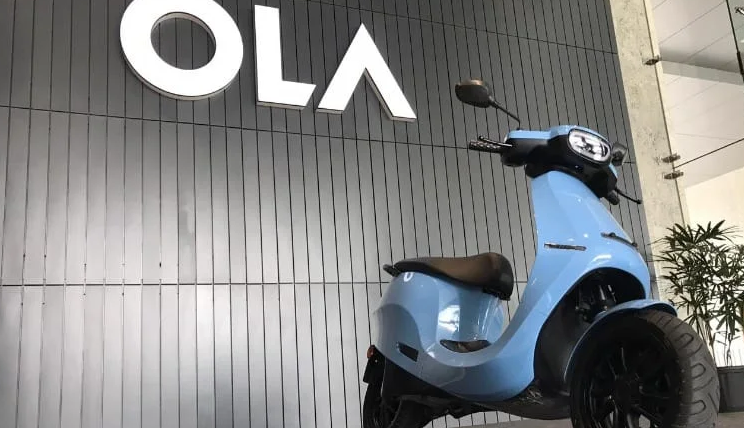
Did Bhavish Aggarwal Innovate the Ola Scooter from Scratch?
No, the original Ola scooter was not built entirely from scratch.
In 2020, Ola Electric acquired Etergo, a Dutch electric scooter startup, along with its AppScooter design, engineering, and intellectual property. The first Ola electric scooter (Ola S1 series) was based on Etergo’s AppScooter platform, including its core chassis, battery layout, and overall design philosophy.
However, this does not mean Ola only rebranded the scooter.
What Ola Actually Did After Buying Etergo
After acquiring Etergo, Ola:
- Adapted the design for Indian road conditions
- Modified software, UI, and connectivity features
- Scaled manufacturing at a much larger industrial level
- Built its own battery packs, OS (MoveOS), and supply chain
- Localized components to reduce costs
So, the base innovation came from Etergo, while execution, scaling, and ecosystem development were done by Ola Electric.
(Straight Truth)
- ✅ Yes, Ola’s first scooter was derived from a Dutch company (Etergo)
- ❌ No, Bhavish Aggarwal did not invent the original scooter design himself
- ✅ Ola’s contribution lies in mass manufacturing, software, branding, and market expansion
This approach is common in the auto industry—many global brands acquire platforms and then build on top of them. The success or failure depends not on origin, but on execution quality and customer trust.
🚀 Why Ola Electric Was Created (Growth or Diversion?)
Bhavish Aggarwal launched Ola Electric to move beyond ride-hailing and enter a high-growth, future-focused sector: electric vehicles (EVs). Unlike Ola Cabs, which depends on commissions and discounts, EV manufacturing offers long-term scalability, brand control, and higher margin potential. Ola Electric is designed to strengthen the overall Ola ecosystem by supporting clean mobility, reducing fuel dependency, and positioning the company as a technology-led manufacturer, not just a service platform.
👉 Does it help growth?
Yes—strategically. EVs give Ola access to manufacturing, exports, government incentives, and global markets, which ride-hailing alone cannot provide.
⚠️ Issues Faced by Customers (Ground Reality)
Despite strong demand, customers have reported several challenges:
- Product Quality Concerns – Early scooter batches faced complaints related to software bugs, battery issues, and build quality.
- Service & Repair Delays – Limited service centers caused long wait times for repairs and spare parts.
- Software Reliability – OTA updates sometimes introduced new bugs instead of fixes.
- Customer Support Gaps – Slow response times and poor communication frustrated users.
Charging Anxiety – Real-world range often felt lower than advertised, especially in hot conditions.
🏭 Issues Faced by Ola Electric as a Company
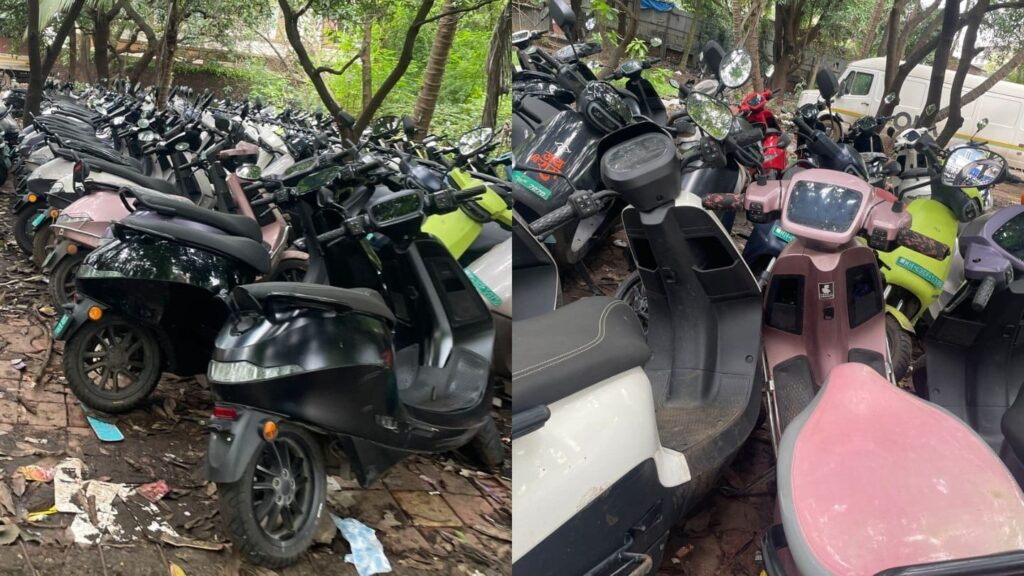
Ola Electric itself faces multiple structural and operational challenges:
- High Cash Burn – Heavy spending on factories, R&D, and marketing puts pressure on finances.
- Execution Risk – Scaling manufacturing while maintaining quality is difficult.
- Brand Trust Damage – Customer complaints can affect long-term credibility.
- Regulatory & Safety Scrutiny – Battery fires and recalls increased compliance pressure.
- Strong Competition – Established players like TVS, Ather, and Bajaj offer more mature products.
🧑💼 Ola Electric Stock Market Debut & Price Movement
Ola Electric Mobility Limited, a subsidiary of ANI Technologies tied to the Ola group, went public via an initial public offering (IPO) in August 2024. The IPO was open for subscription from August 2 to August 6, 2024, with a price band of ₹72–₹76 per share, and the shares were listed on the BSE and NSE on August 9, 2024. The stock debuted at around ₹76 per share, matching its issue price on listing day. Moneycontrol+1
After a promising early response—where shares briefly climbed above the issue price—the stock experienced significant declines. From a short-lived peak above ₹150, the share price fell steeply over time, at one point dropping more than 70 % from its high and trading below its IPO price by mid-2025.
📊 Historical Price Snapshot (Simplified)
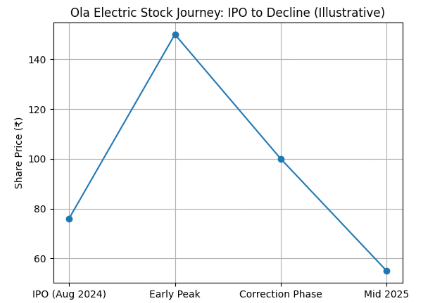
- IPO Price / Listing Price (Aug 9, 2024): ~₹76 per share Outlook Business
- Early Post-IPO Peak: Over ₹150 per share (short-term rally) Angel One
- Later 2025 Levels: Declined significantly from highs, trading below IPO price in mid-2025 The Economic Times
Downfall of Ola Company – Unheard Things In 12 Key Aspects

- Low-Margin Core Business
Ride-hailing depends heavily on discounts and driver incentives, making long-term profitability difficult. - Rising Operational Costs
Fuel price volatility, driver payouts, customer support, and compliance costs increased overall expenses. - Customer Trust Erosion
Frequent complaints about cancellations, surge pricing, and service quality weakened user confidence. - Driver Dissatisfaction
Reduced incentives and high commissions led to driver attrition and inconsistent ride availability. - Intense Competition
Strong rivals like Uber, Rapido, and local operators captured market share with aggressive pricing. - Service Quality Inconsistency
Customer experience varied widely across cities, hurting brand reliability. - Technology & App Issues
App glitches, payment failures, and inaccurate pricing frustrated users. - Financial Losses
Despite high revenue, Ola struggled with sustained losses due to aggressive expansion and cash burn. - Regulatory Pressure
Government regulations on pricing, driver welfare, and safety increased compliance challenges. - Execution Gaps in Ola Electric
Quality issues, service delays, and recalls in Ola Electric affected the overall brand image. - Over-Diversification Risk
Expanding into EVs, finance, and AI stretched focus and capital across multiple fronts. - Brand Perception Shift
Ola shifted from being a “reliable daily transport app” to a company often associated with complaints and controversy.

Leave a Reply